
Columbia Criminal History Checks
Begin a Columbia criminal history check with the event, not just a name. A Columbia Police response points first to the Police Records Division. A blue police citation or white downtown parking citation belongs with Columbia City Court. Pink Sheriff citations and white Tennessee Highway Patrol citations route to the Maury County clerk instead. This first choice prevents a search at the wrong counter.
Follow the record outward only when needed. The city report describes the local event, while a county file shows charges and disposition after prosecution begins. Maury County Jail holds separate custody data. Tennessee Open Records Information Services, or TORIS, offers a statewide fingerprint-supported name check for $29, but it does not replace the Columbia report or court file.
- Identify whether Columbia Police, another agency, or a court created the record.
- Ask Columbia Police Records for the incident, arrest, crash, or summons report.
- Use Columbia City Court for a city traffic, parking, or ordinance citation.
- Check Maury County booking and court channels when custody or prosecution continued.
- Use TBI TORIS when a statewide Tennessee history is needed.
Use identifying facts with care. A full name alone can point to the wrong Columbia record, especially when several people share it. Compare the incident date, issuing agency, case or citation number, and court. For an older prosecution, ask the clerk for the exact disposition of each charge. Dismissal, nolle prosequi, acquittal, diversion, and conviction have different meanings. A dismissal also does not prove that every public trace was expunged. The court where the case began controls the expungement process, while TBI updates its repository after it receives and processes the order.
A complete self-review may require the city report, county docket, and state history because each was created for a different task. The report tells what officers recorded. Booking documents custody. The docket shows how prosecutors and the court handled each charge. TORIS shows the statewide repository layer. Write down the date and identifier from each result, then compare the sequence. If two sources conflict, ask the office that originated the disputed fact. A clerk can explain its docket entry, while Columbia Police can address its report. TBI has its own challenge path for a potentially inaccurate repository record and may require fingerprints to confirm identity.
TORIS itself has limits that matter in Columbia. Its public name check does not include aliases and excludes juvenile information except qualifying adult-transfer matters. It can return fingerprint-supported Tennessee misdemeanor and felony arrest history, but it is not a national search. A Columbia Police event that was not submitted or matched may not appear. Conversely, a statewide result can include an event outside Columbia. Review the report on a desktop or laptop if the PDF will not display on a mobile device, a limitation TBI notes on its service.
Columbia Police Record Types
Columbia Police Records is the central city repository for offense, incident, arrest, field-interview, crash, and traffic-summons records. They answer different questions. An incident report may exist without an arrest. An arrest report states the legal basis and charges at that point. A crash file documents a collision, while a summons record helps identify which court received a citation.
The official Columbia Police Records Division page shows the desk and its release rules.
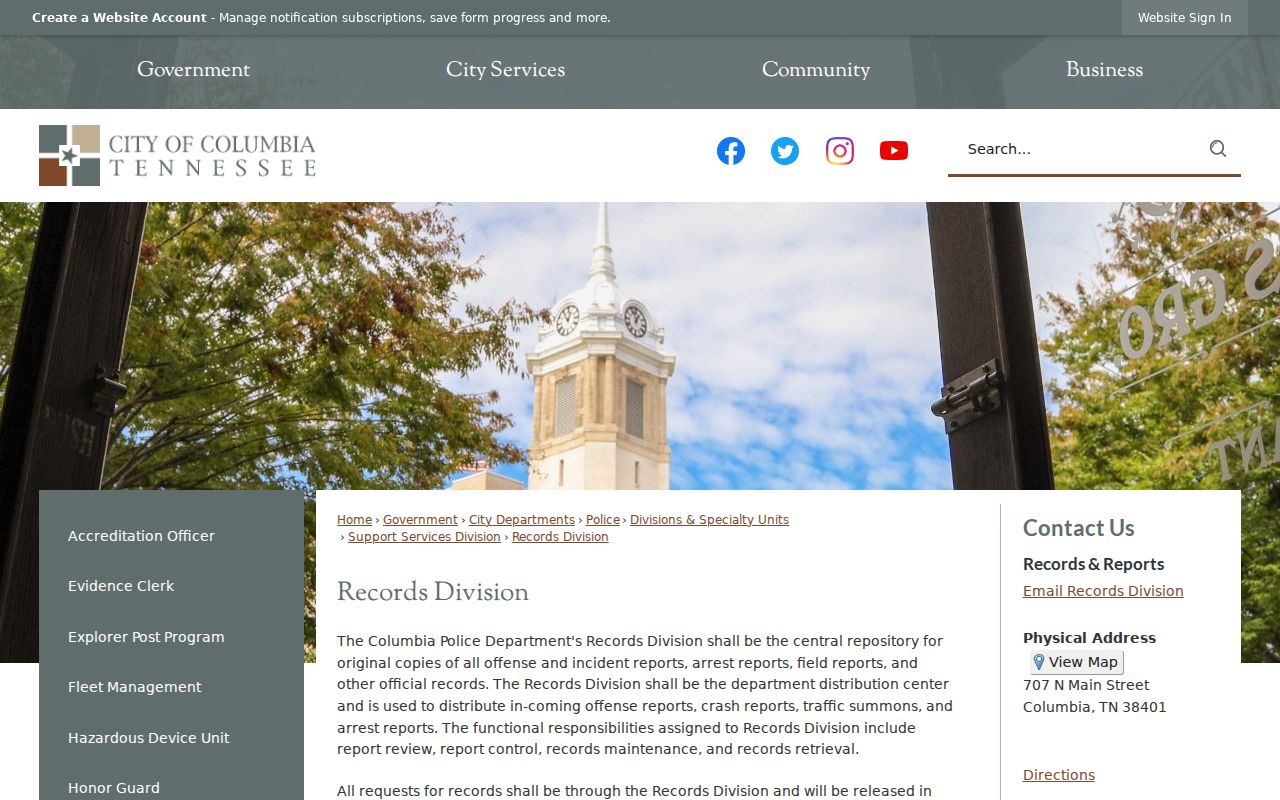
That city source is the best first check for a report created by Columbia officers, not for a Sheriff event elsewhere in Maury County.
Ask which record type staff located before paying for a copy. An offense report may summarize a reported event. A field-interview record documents an officer contact that may not result in a charge. The arrest report records custody and the legal basis at that moment. Court pleadings and judgments are kept elsewhere. These distinctions help a Columbia requester avoid treating a preliminary police file as the last word. They also show why a report date and case number are stronger locators than a broad request for everything tied to one name.
Records at the Columbia Police Department
The Columbia Police Records Division is at 707 N. Main Street, Columbia, TN 38401. Its public hours are Monday through Friday, 7:30 a.m. to 4 p.m. Call 931-560-1650 or fax 931-560-1669. The research found a phone, fax, and email workflow rather than a public name-search portal or criminal-record mobile app.
Reports of ten pages or fewer are generally provided without charge. Larger files incur copy costs and require pickup. Give the desk the report number when known, the date and place of the event, and the specific record sought. Columbia may withhold an active-investigation report, and protected victim, juvenile, medical, or personal identifier material can be redacted.
Call before visiting when the request involves an old file or more than ten pages. The desk can explain whether the record is ready, whether pickup is required, and which cost applies. A city record request is not a TORIS order. Columbia Police searches its own records, while TORIS searches Tennessee repository information built from fingerprint submissions. Likewise, Columbia Police cannot provide a certified court disposition. That document comes from the clerk whose docket contains the case. Keeping the requested product clear saves time at both offices.
Requests should be narrow enough for staff to identify the material. State that the request concerns a Columbia offense, incident, arrest, field interview, crash, or traffic summons. Add the approximate date and place. If a report number appears on paperwork, include it exactly. Ask whether inspection can meet the need before ordering a large copy set. The city can explain its actual charge and pickup process. Avoid asking the department to assemble conclusions from several systems. The Public Records Act opens existing records subject to exceptions; it does not require Columbia staff to create a new criminal-history report that the department does not already maintain.
For a Sheriff event inside the broader county, use the Sheriff's separate request form rather than Columbia Records. The county form accepts an incident date, case number, incident type, location, subject name when an arrest occurred, and a short description. It lists $0.15 for black-and-white pages and $0.50 for color pages, plus mailing and labor rules. Those prices belong to the Sheriff form and should not be assumed for a larger Columbia Police report. The Columbia desk supplies its own current city cost before pickup.
Columbia Active Record Limits
A report can exist yet remain closed while Columbia Police actively investigates the event. That limit does not mean every related record has vanished. A public city citation docket may still identify a court event, and a county clerk may hold a later filing after charges move forward. Each custodian applies the law to the record it controls.
Ask for a written explanation if access is denied. A narrower request may separate releasable material from protected details. Tennessee law allows redaction rather than forcing release of confidential juvenile data, victim information, Social Security numbers, financial identifiers, or sealed content. The date, incident location, and report number help Columbia staff distinguish the right file without relying on a common name alone.
Timing also affects what is available. A recent event may still be under review, while a later court docket may not yet carry a final result. Return to the correct custodian as the event moves through the system. Columbia Police can address the report it created. The city clerk can address a municipal citation. Maury County clerks can address a county prosecution. TBI can explain repository review and challenge procedures. No office should be asked to certify another office's record, and a blank search at one layer does not prove that no event occurred.
For an old Columbia file, begin with the year and the office likely to have created it. City Police remains the source for its report. Municipal citations stay with the city clerk. The county court counter moved in October 2024, so older directions to the historic courthouse may be stale. Circuit Criminal and General Sessions Part I now operate from the Maury County Judicial Center at 1115 S. Main Street. This relocation matters when a Columbia city event became a county case. It does not move Columbia Police Records or Columbia City Court from their own addresses.
The Judicial Center counter is open Monday through Friday from 8 a.m. to 5 p.m. Circuit Criminal can be reached at 931-375-1107 or 931-375-1108. General Sessions Criminal and Traffic uses 931-375-1103 through 931-375-1106. The Magistrate's Office at the jail complex is a different function. It conducts initial proceedings and can address warrant process, but it does not keep the later docket, change court dates, or take case payments. Directing the question by function is as important as using the new address.
Booking and Arrest Records in Columbia
Columbia Police creates the arrest report, while Maury County Jail creates the booking and custody record after transport to the Lawson White Drive complex. Jail intake adds booking data, classification, housing, bond, and release details. The magistrate then handles initial process and bond. Those records can describe one event without containing the same fields.
Maury County publishes no searchable booking roster. For current custody, call the jail at 931-380-5733 or booking and bond at 931-375-8661. VINELink provides custody status and notifications. The Maury County arrest search route explains the county-level fallback in depth. An arrest is an allegation, so verify the outcome in the proper court file.
A caller should distinguish current custody from the history of an arrest. Booking can confirm whether someone is held and may give bond information. VINELink can supply custody notifications. Neither source replaces the Columbia Police narrative or a court disposition. If the event has moved beyond the first appearance, General Sessions or Circuit Criminal becomes the better source for filed charges. If no county booking exists, verify whether another agency or facility handled the event rather than assuming the Columbia report is wrong.
One Columbia arrest can create several identifiers. Police may assign a report number. Booking may assign a booking number. A warrant or county prosecution receives a docket number. TBI uses fingerprint-supported transaction data. Preserve the identifier shown by each source and do not substitute one for another when calling. The booking line is best for live custody and bond questions. The magistrate conducts initial proceedings but does not maintain the later docket or accept case payments. The clerk is the source for scheduled court activity and final disposition. These boundaries prevent a caller from being sent between offices without the right number.
Columbia Citation Record Routing
Citation color is a practical Columbia clue. Blue Columbia Police tickets and white downtown parking citations go to Columbia City Court. A pink Maury County Sheriff citation or a white Tennessee Highway Patrol citation goes to the Maury Circuit Clerk. Color is useful, but the issuing agency and court printed on the paper remain the strongest routing facts.
Columbia lists mandatory appearances for leaving an accident scene, drag racing, reckless driving, failure to report an accident, texting or cellphone violations, and due-care violations. A required appearance should not be treated like a citation that can simply be paid. Call the city clerk at 931-560-1520 when the court assignment or response is unclear.
County payment pages specifically exclude citations issued by Columbia Police. Sending payment to the wrong court can delay processing and does not resolve the city docket. Read the issuing agency, court name, and appearance language on the citation before acting. If a paper copy is hard to read, use the citation number when calling the clerk. A city traffic record stays at city altitude unless the matter transfers, produces a separate county case, or creates another record held by Maury County.
The Columbia Municipal Court File
Columbia City Court keeps the docket for city traffic, parking, and ordinance matters. The clerk contact is at 700 N. Garden Street, Columbia, TN 38401, and the phone is 931-560-1520. Judge Richard Matthews is identified on the official city page. This counter differs from Columbia Police Records at 707 N. Main Street, even though the two addresses are close.
A municipal file can show the citation, party and court data, scheduled events, plea or payment activity, disposition, and financial terms that the clerk maintains. It will not contain every police narrative or a statewide arrest history. Ask the clerk how to inspect the docket and what current copy charge applies before ordering because the research did not locate a published city-court copy schedule.
| Court Name | Columbia City Court |
|---|---|
| Case Types Heard | City traffic, parking, and ordinance violations |
| Case Lookup Channel | City clerk at 700 N. Garden Street or 931-560-1520 |
| What the Docket Shows | Citation, events, plea or payment activity, disposition, and court amounts |
| Copies & Fees | Confirm the current charge with the city clerk |
Read each docket event in order. A scheduled hearing is not a disposition, and payment activity does not by itself describe every legal result. When a certified outcome is needed, ask the clerk whether a certified copy is available and what it will cost. City Court cannot supply a Columbia Police investigative narrative. Conversely, Police Records cannot certify the judge's disposition. The close addresses can make the offices seem interchangeable, but the file type remains the deciding fact.
When the citation routes to Maury County instead, identify whether it belongs in General Sessions Part I or another court. The county payment page warns that city-police citations are excluded. A city citation can remain municipal even though Columbia is the county seat. On the other hand, a Sheriff or Highway Patrol paper issued in Columbia can belong to the county clerk. The location where the event happened does not override the agency and court printed on the document. If the docket later reaches Circuit Court or an appellate court, follow that new case number rather than expecting the city clerk to mirror every later filing.
Columbia Crime Table Records
Columbia Police publishes periodic crime information with current-week, prior-week, prior four-week, year-to-date, prior-year, and year-end comparisons. These figures describe reported offenses. They are not counts of arrests, convictions, or people. Check the period and reporting completeness before comparing two columns or drawing a trend from a short span.
The layered official table is more useful than an unsourced city crime rate because a reader can see what time frame changed. Use it to understand local police activity, then request the event record from Columbia Police when a specific case matters. Tennessee CrimeInsight and the FBI Crime Data Explorer provide broader comparison layers, but they do not replace Columbia source files.
Do not compare a reported-offense total with an arrest count. One reported event can produce no arrest, one arrest, or several later charges. A year-to-date figure can also be incomplete if agencies have not finished reporting. Record the table date, category, and comparison period when using the figure for research. For a specific incident, shift from the aggregate table to the report number and custodian. That transition keeps Columbia statistics in context and avoids attaching a citywide number to an individual case.
How Columbia Records Reach the County
A Columbia arrest starts with the police report. Maury Jail creates custody data, and a magistrate handles initial process. General Sessions keeps warrant, misdemeanor, and early felony activity. A grand-jury indictment sends a felony into Circuit Criminal Court. Reporting agencies then send fingerprint-supported arrest and disposition information to the Tennessee Bureau of Investigation.
Record flow: Columbia Police › Maury County Courts › Tennessee Bureau of Investigation
Recent facts are most likely at Columbia Police or booking. Filed charges and outcomes belong in the clerk file. TORIS is the later statewide check, though reporting time and identifier mismatches can produce gaps. A Columbia record may therefore require two or three official checks rather than one broad name search.
The county route splits again by case stage. General Sessions holds warrants, misdemeanors, and preliminary felony matters. After indictment, Circuit Criminal holds the felony prosecution at the Maury County Judicial Center. The Tennessee appellate portal is only for an appeal, not every Columbia trial case. At the state level, TORIS reports fingerprint-supported Tennessee arrest history and linked outcomes that were submitted. It does not deliver local pleadings, motion papers, or a complete police report. A clear timeline shows which office is most likely to have the needed document.
Disposition reporting can lag behind a local ruling. If TORIS and the Columbia or Maury County record differ, first obtain the signed court disposition and confirm the subject identifiers. A person reviewing their own TBI history can then use the official TBI record-review and challenge process. If a qualifying expungement order was entered, keep a certified copy and allow for agency processing. TBI states that it removes qualifying charge and fingerprint material after it receives the proper order. A dismissal by itself is not the same as expungement, so the docket language and signed order matter.
For sentenced felony custody or state community supervision, TDOC Felony Offender Information Lookup answers another narrow question. FOIL can show a Tennessee Department of Correction status, location, offense, sentence, and certain release information. It does not replace Columbia Jail data for local or pretrial custody. Likewise, the Tennessee Sex Offender Registry is a separate public-safety database with its own legal fields and registering agencies. Neither system should be treated as a substitute for the Columbia report or municipal docket.
Columbia Campus Crime Records
Columbia State Community College has a distinct public-safety record channel at 1665 Hampshire Pike. Its Public Safety office maintains a daily crime log for the most recent 60 days. The log is free and ordinarily available within two business days. Annual Security Reports and Clery tables add a longer campus view.
The Columbia State Public Safety page identifies this separate source.
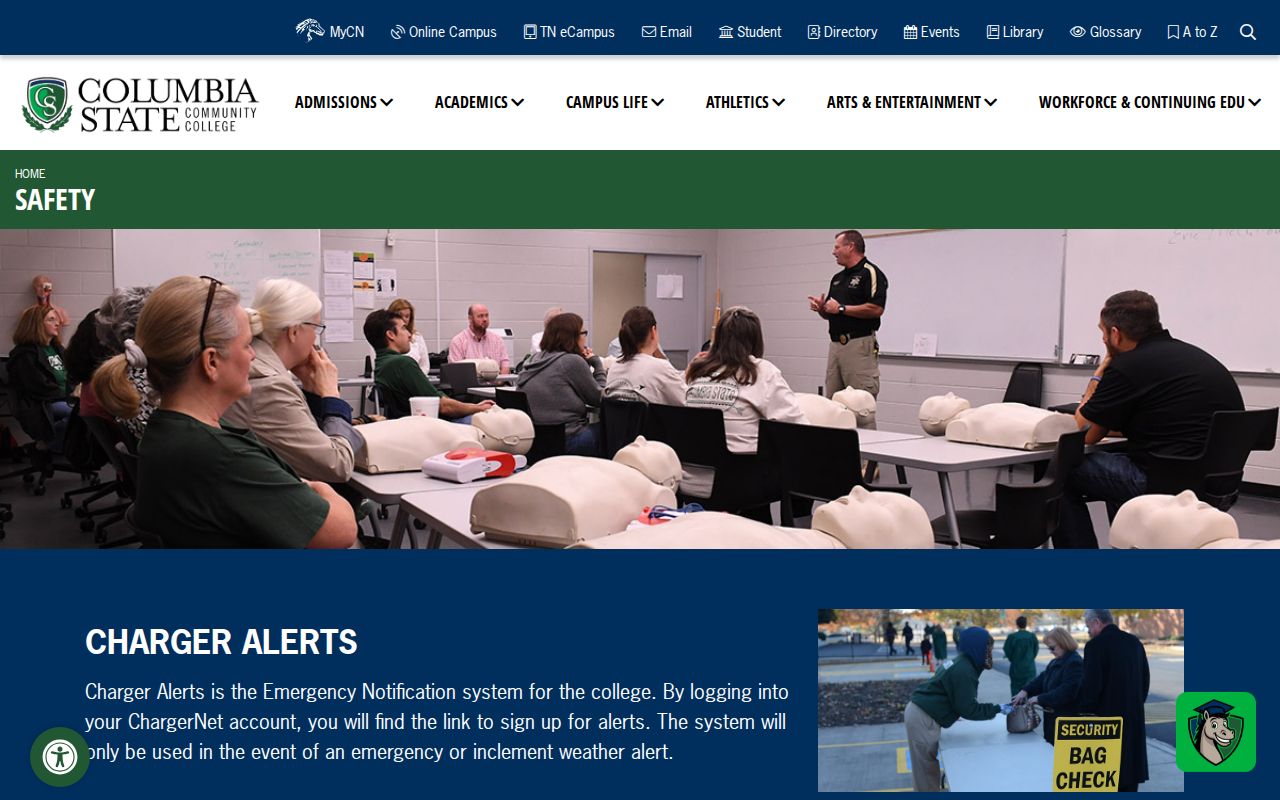
A campus log does not replace a Columbia Police report, jail booking, or court file. It is useful when the reported place was on campus and the reader needs the institution's own log or annual security data.
Start with the precise campus location and date. Columbia State Public Safety can identify its log entry and security-report material, while a responding law-enforcement agency may hold a separate incident or arrest record. The two sources can describe different parts of the same event. Annual Clery tables also use defined reporting categories and geography, so they should not be read as a list of criminal convictions. For a later prosecution, use the court docket to confirm what charge was actually filed and how it ended.
Columbia Custody Record History
Columbia unveiled a marker in June 2026 at the site of the 1977 Maury County jail fire. The city states that 42 people died in Tennessee's deadliest jail fire and that the event influenced jail design and construction safety. The marker supplies serious local context for why custody logs, facility records, and public accountability matter.
The city's jail-fire marker announcement documents the milestone.
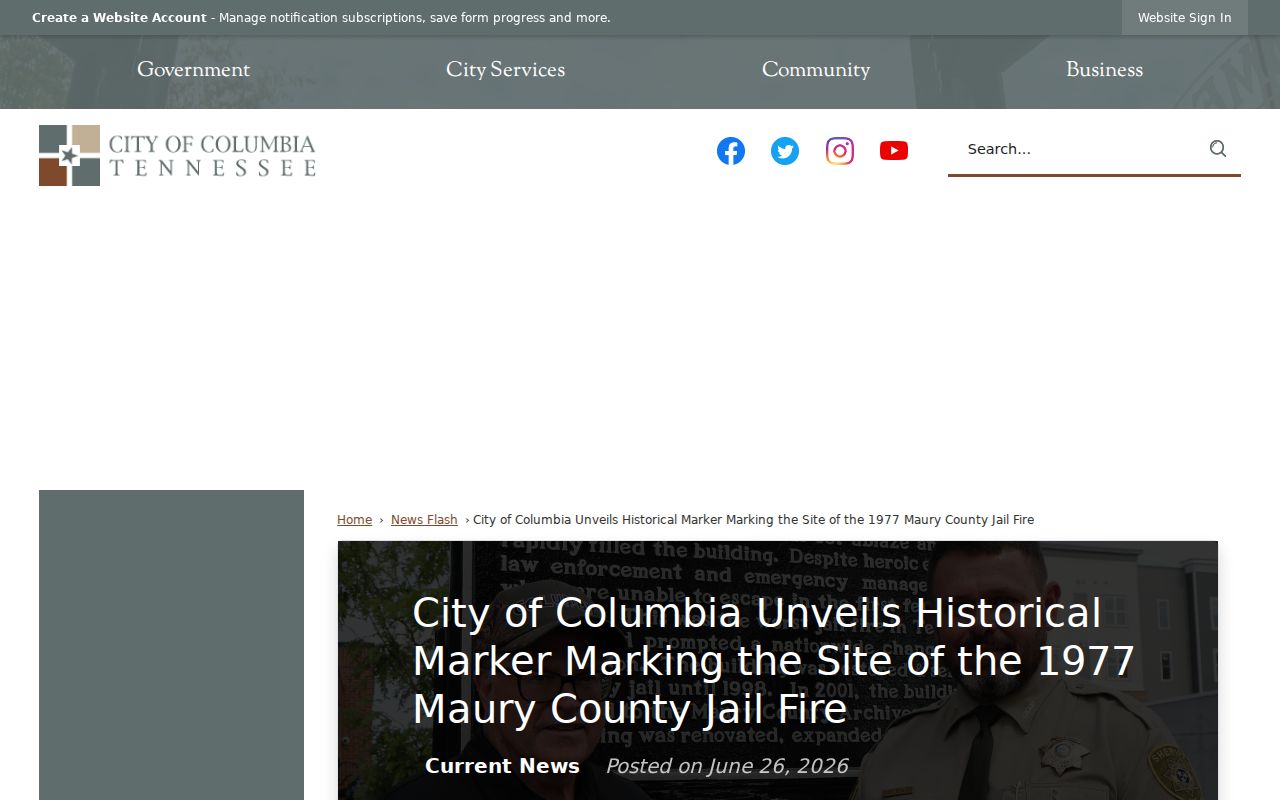
Modern Columbia custody questions belong at the current Maury County Jail, not the historic site. The marker explains local corrections history without serving as a present-day record-search tool.
Historic and modern sources should remain distinct. The marker documents a major Columbia and Maury County event, while present custody information comes from the Sheriff, booking line, and VINELink. Researchers studying the fire can use the city announcement as a dated official account. Someone checking current bond or release status should call the current facility. This separation honors the local history without confusing an archival milestone with a live corrections database.
Columbia Record Access Rules
The Tennessee Public Records Act lets Tennessee citizens inspect and copy city records unless another law makes the material confidential. Columbia may verify citizenship and require a request detailed enough to locate the file. Inspection is generally free, while copies and research can carry lawful charges. Judicial files also follow Tennessee Supreme Court Rule 34.
Access has firm limits. Columbia may withhold or redact active investigative information, confidential juvenile matters, protected victim data, Social Security numbers, financial identifiers, sealed documents, and expunged records. A denial or delay should identify the legal basis or the time needed. Tennessee's seven-business-day rule is a response framework, not a promise that every large request will be produced by that date.
Key Statutes:
Tennessee Public Records Act, Tenn. Code Ann. §§ 10-7-501 through 10-7-506 - Opens state, county, and municipal records unless a specific exemption controls.
Tennessee Supreme Court Rule 34 - Sets access procedures, fees, and exemptions for judicial records.
Tenn. Code Ann. § 38-6-120 - Supports TBI repository and public criminal-history check operations.
If Columbia cannot produce a record promptly, the custodian may provide it, deny access with an explanation, or explain the legal reason more time is needed within the statutory response period. Tennessee Open Records Counsel can explain the law or mediate but does not retrieve Columbia documents. Judicial access questions go to the clerk under Rule 34. A requester challenging their own TBI record follows TBI's separate fingerprint comparison process. Each remedy tracks the custodian and kind of record involved.